
Shap Abbey
OS grid ref. NY 548 153
Shap Abbey, dedicated to St. Mary Magdalene, was founded at the end of twelfth century by the canons of the Premonstratensian order, also known as the White Canons due to their white habits. It lies in a quiet, lonely and picturesque setting by the River Lowther.
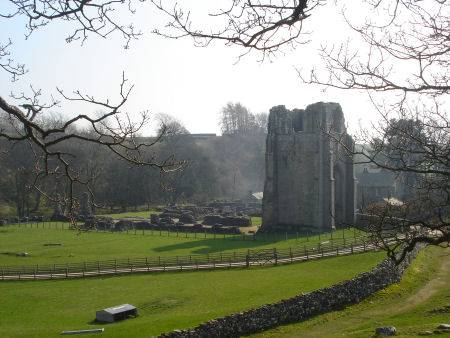
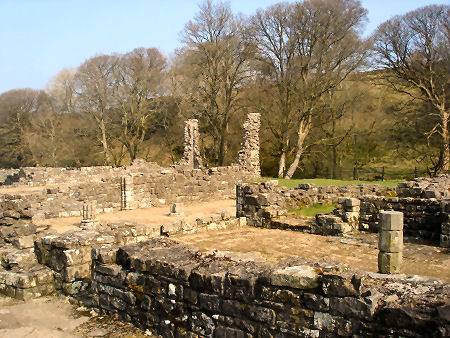
The Abbey was endowed by Thomas, son of Gospatric, a Westmorland baron. It was not a particularly large establishment, and consisted of a community of an abbot and around 12 canons, but held vast lands throughout the county of Westmorland. In the twelfth century it was known as 'Hepp', meaning a heap, which, over the course of the proceeding century changed to Shap. The chapter house, dormitory, warming house and cloisters were built between 1200-1300, two chapels were added in the fifteenth century.
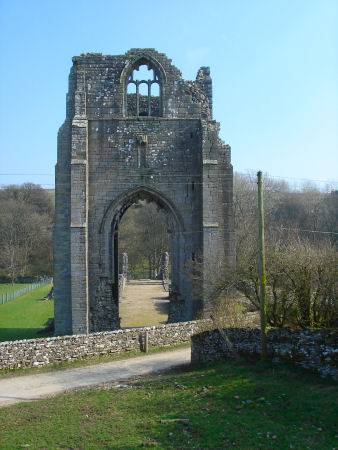
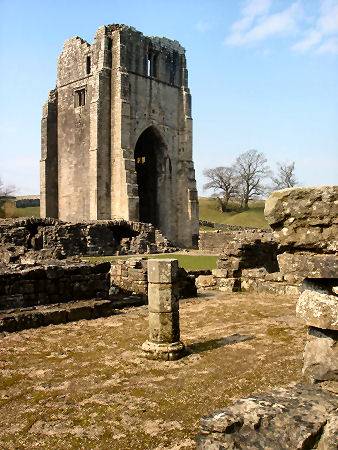
The Abbey is now in the care of English Heritage. A substantial amount of the west tower remains along with the foundations of the living quarters and church. The tower is the most impressive surviving feature, still standing to its orginal height, although the parapets and the windows are absent. Shap Abbey was one the last abbeys to be disolved under Henry VIII on 14th January, 1540.
Following the closure of the abbey, the abbot, Richard Evanwood and the canons were each granted a pension and the abbey lands sold off. In the case of the abbot himself, this ammounted to £40 per year, a considerable sum at the time. The abbey was granted to Sir Thomas Wharton, Governor of Carlisle. Some of the buildings were converted into a farm. The main fabric of the building was stripped of its roof and gradually fell into decay, much of the lead was taken by Lord Wharton. His descendants sold it, in 1728 to Robert Lowther of Maulds Meaburn. In 1896, the Earl of Lonsdale took away the best pieces of surviving carved stone to decorate his gardens at Lowther Castle on the occasion of a a visit from Kaiser Wilhelm II.
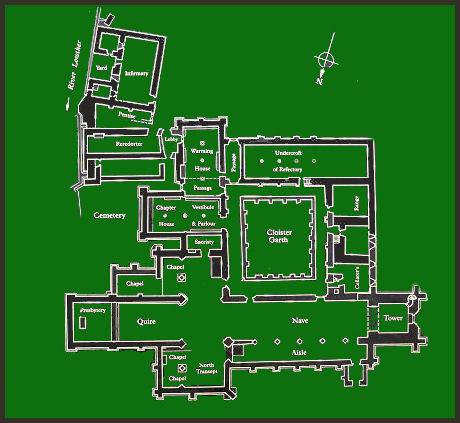
Plan of the Abbey
A path from the abbey leads to the small 16th Century Keld Chapel, which is now in the care of the National Trust. North-East of the abbey lie some prehistoric standing stones, one of which is known as the Thunder Stone. The Kemp Howe Stone Circle is a short walk from Shap Abbey.